ServicesOffice Window Tinting
Office Window Tinting in Kemah
We install window film in offices to cut screen glare, cool the desks by the glass and slow the fading of carpet, chairs and finishes. Your staff keep the view. Your HVAC works less hard, and the office you already paid for lasts longer.
Film that makes the office easier to work in, and easier to keep
Most offices we see have the same complaints. The people by the windows squint at their monitors and lower the blinds by mid-morning, while the people in the middle of the room reach for a sweater. Office window tinting fixes the cause rather than the symptom. A thin film applied to the inside of the glass rejects a large share of solar heat, takes the harsh edge off glare and blocks nearly all UV.
We treat it as upkeep for the space. UV is what bleaches carpet, desk laminate, artwork and upholstered chairs, and heat at the glass keeps your air conditioning running longer through a Gulf Coast summer. Slowing both helps the furniture, the finishes and the equipment you already own last longer before anything needs replacing.
Our insured installers have been fitting window film for 8 years, and we size each recommendation to the room: a reception area, a row of private offices and a conference room facing west rarely need the same film.
What our office window tinting includes
- A walk-through of every elevation
- We look at which windows take morning and afternoon sun, where the glare hits screens and how each room is used. That tells us where film earns its keep and where it does not.
- Film matched to the work
- For most offices that means a ceramic film or a low-reflectivity film that keeps a clear outward view. Where heat is the main problem, a reflective window film may make more sense. We explain the trade-off in plain terms.
- Glass checks before we commit
- Large dual-pane units can be sensitive to how much heat a film absorbs. We note the glass type and choose a film suited to it.
- Careful prep and clean edges
- Gaskets and frames are wiped, glass is scraped and cleaned, and film is trimmed tight to the edge so the finish looks like it belongs there.
- Furniture and floor protection
- We move what we need to, cover desks and carpet near the windows, and put everything back where it was.
- Care instructions for your cleaning crew
- We leave simple guidance on curing time and which cleaners and tools are safe, so the film keeps its clarity for years.
Signs your office could use window film
Blinds stay closed all day
If the shades are down to stop glare, you have lost the daylight and the view you are paying rent for. Film lets you open them again.
Hot desks and cold desks
Staff by the glass run warm while others are chilly. That uneven temperature often traces back to solar heat coming through untreated windows.
Faded carpet and furniture
A pale stripe on the carpet or chair fabric that has turned a shade lighter near the window is UV damage, and it keeps going until the glass is treated.
Monitor glare complaints
Squinting, screens turned at odd angles and people moving desks are all glare problems. Glare reduction film is usually the simplest fix.
Old film that is bubbling or purple
Aging film loses its performance and looks tired to visitors. We remove it cleanly and replace it.
What sets the cost of office window tinting
Office window film is priced by the job, not by a flat rate per window. The amount of glass and the film you choose matter most, followed by how easy the windows are to reach. We put each of these on the quote so you can see where the cost comes from.
Square footage of glass
More and larger panes mean more film and more labor. Floor-to-ceiling storefront glass is measured differently from standard office windows.
Film type
Ceramic film costs more than a basic dyed or reflective film, and it brings stronger heat rejection without darkening the room.
Access and furniture
High transoms, windows behind built-in cabinets or rooms full of equipment take more time to prepare and work around.
Removing old film
Stripping aged film and adhesive is slow, careful work and is quoted as its own line.
After-hours scheduling
Evening or weekend work to keep your office running may affect the schedule and the quote.
How an office job runs
- 1
A call and a site visit
You tell us what bothers your team, and we come look at the windows and measure. You get your quote by phone with the film options laid out.
- 2
Scheduling around your hours
We plan the work so it disrupts as few people as possible. Many offices prefer early mornings, a slow afternoon or a weekend, and we work room by room so the rest of the office carries on.
- 3
Installation day
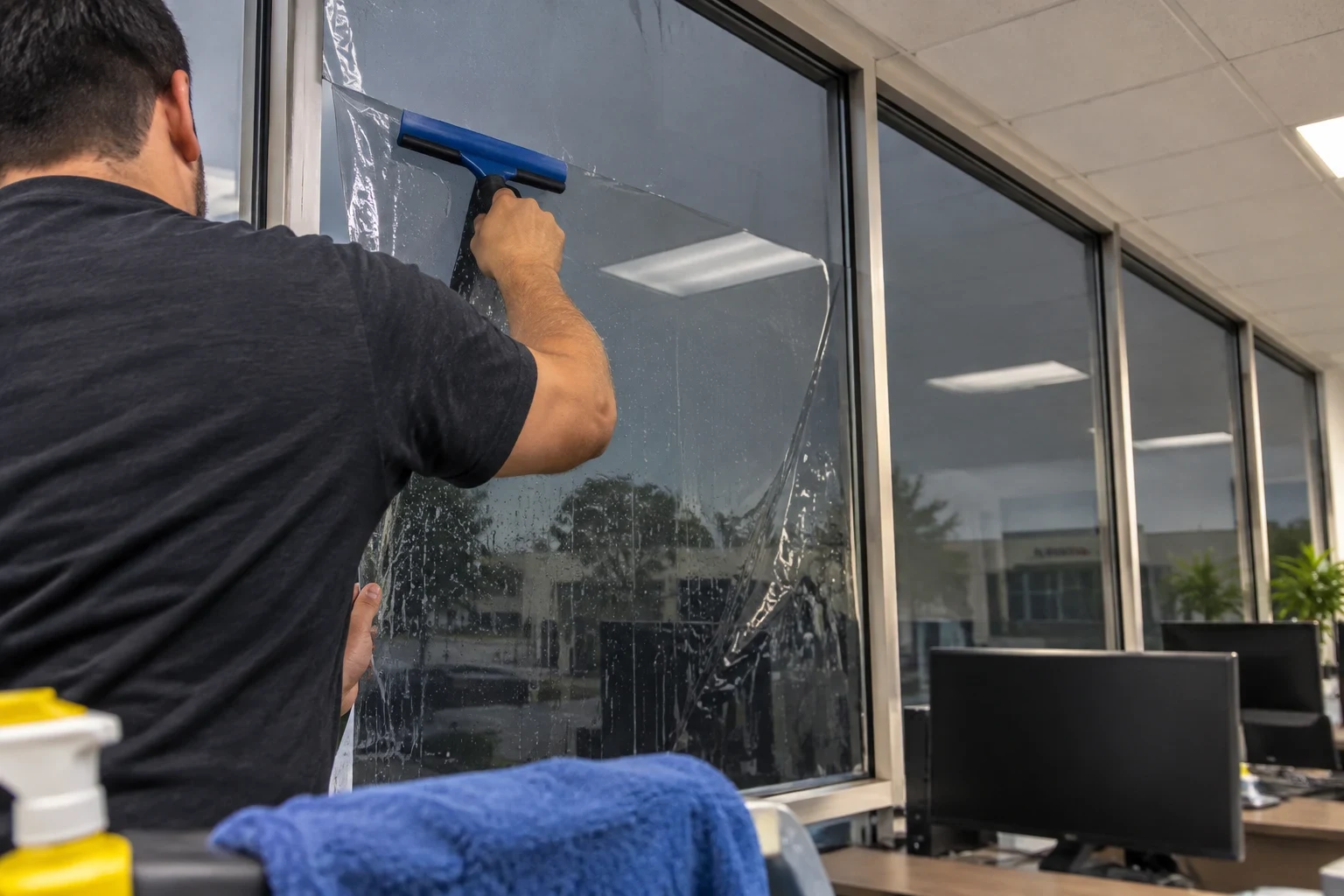
We protect the area, clean each pane, apply the film with a slip solution and squeegee out the water. A typical office suite is finished in a day or less.
- 4
Curing and a final look
Film can look slightly hazy for a few days while moisture evaporates. We walk the space with you before we leave and point out anything to keep an eye on.
Questions about office window tinting
Will window film make our office feel dark?
Not unless you want it to. Many films for offices, especially ceramic film and non-reflective window film, cut heat and glare while staying close to clear. We bring samples so you can hold them up to your own glass and see the difference before choosing.
Do we need the landlord's permission?
If you lease, it is a good idea to check, since some buildings have rules about how windows look from outside. We can tell you how a film will appear from the street, and a low-reflectivity option often satisfies building requirements.
Can you work while our staff are in the office?
Yes. We work one room or one section at a time, and the process is quiet with no fumes. If you would rather avoid any disruption, we can schedule outside business hours.
How do we clean the windows afterward?
Wait a few days for the film to cure, then use a soft cloth or squeegee with a mild, ammonia-free cleaner. Skip razor blades and abrasive pads on the filmed side. We leave written notes for your cleaning crew.
Can film add privacy or security too?
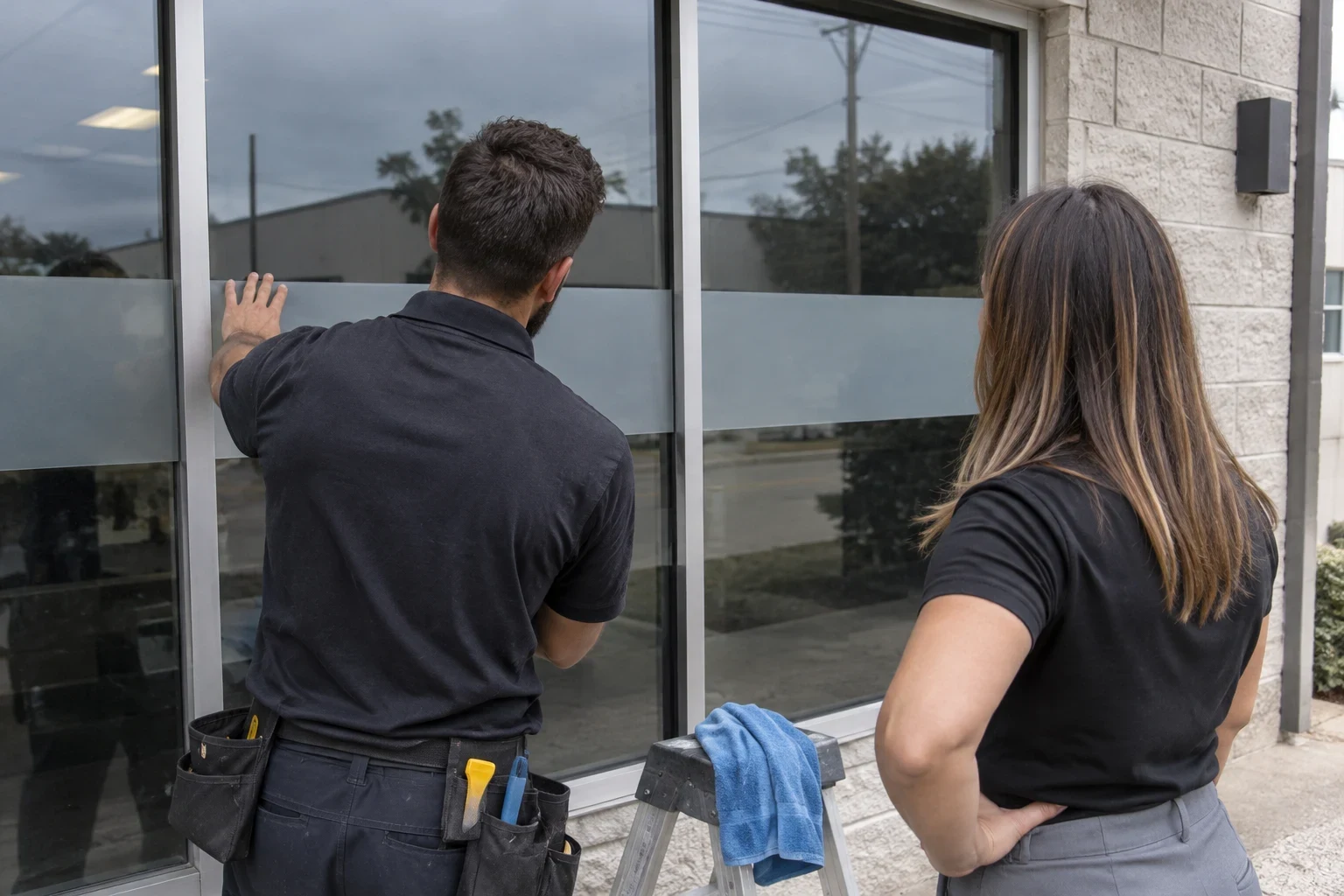
It can. Conference rooms and ground-floor offices often pair heat control with privacy window tinting, decorative window tinting for frosted bands, or security window film that holds broken glass in place. We can combine these in one visit.
Let your team open the blinds again
We will look at your windows, show you film samples on your own glass and explain which option fits each room. The visit and the quote cost you nothing.