ServicesNon-Reflective Window Film
Non-Reflective Window Film in Kemah
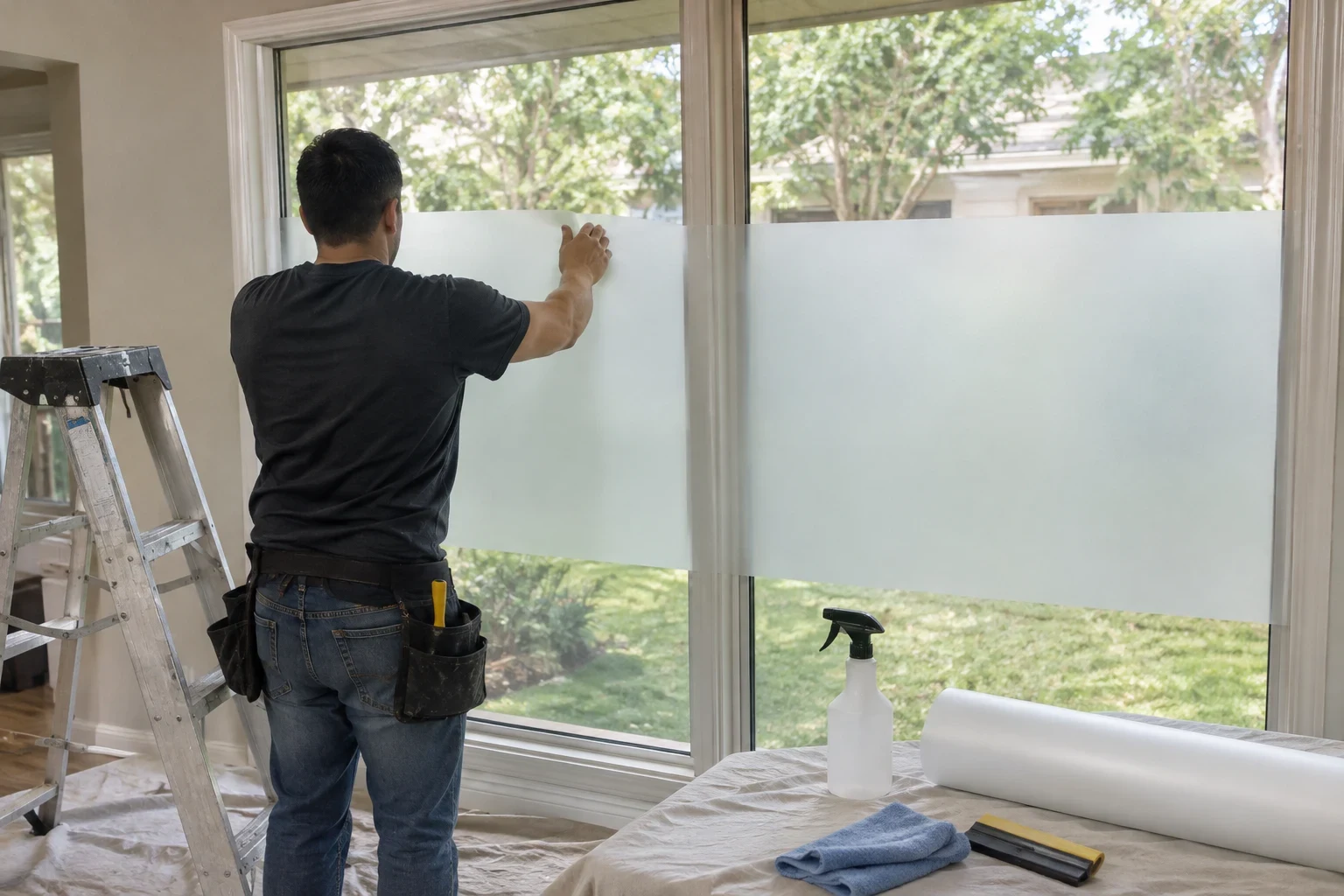
We install non-reflective window film that cuts heat and glare and blocks most UV, while your windows keep their natural, clear look. No mirrored shine from the street, and far less of your own reflection staring back at night.
Sun control that leaves your glass looking like glass
Non-reflective film is for people who want the benefits of window film but not the shiny, mirrored finish. It uses dyes, carbon or ceramic particles to absorb and reject solar heat instead of bouncing it back with a metallic layer. From outside, the window looks close to untreated glass. From inside, the view stays true in color.
It is often the right call where an HOA limits reflective finishes, where a historic or traditional facade should stay unchanged, or where you simply dislike the look of mirrored glass. It also suits rooms you use after dark, because low interior reflectance means the window does not turn into a mirror once the lights come on.
We see this film as upkeep for what you already own. Slowing UV fade on wood floors, upholstery and artwork, and easing the load on your air conditioning, adds years to things that are expensive to replace.
What the work includes
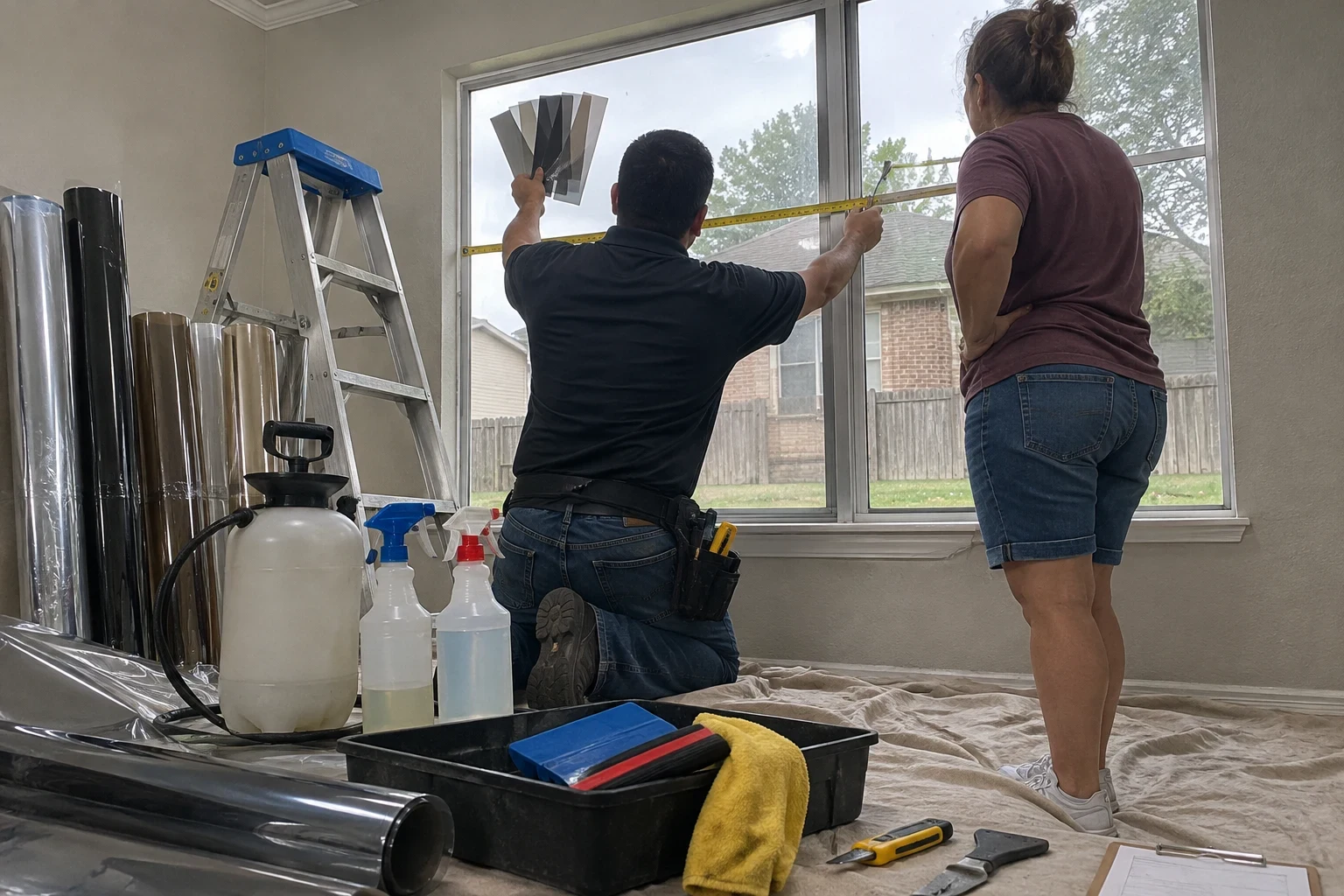
- A glass check before we quote
- We look at each window's glass type, whether it is single or dual pane, tempered or annealed, and how much direct sun it takes. Some films are a poor match for certain dual-pane units, and we will tell you that before anything is ordered.
- Film samples on your own windows
- We hold samples up to your glass in daylight so you can judge tint level and clarity in the actual room. Shades that look alike on a chart can read quite differently against a bright western window.
- Careful prep of glass and frames
- We cover sills and nearby floors, then clean each pane and scrape away fine debris and old residue. Most bubbles and specks in a finished film trace back to rushed prep, so we take our time here.
- Precise, edge-trimmed installation
- We trim each sheet just short of the frame seal, leaving a hairline margin so the edges stay down as the glass warms and cools through the day. Our installers are insured, and they work clean and quiet inside your rooms.
- Care instructions and warranty details
- Before we leave, we walk you through curing time and safe cleaning. On residential jobs, you get our lifetime warranty on home window tinting.
Signs non-reflective film is the right fit
Rugs and floors are fading
Pale stripes on hardwood or a sun-bleached sofa arm are UV damage in progress. Film slows it long before you need to refinish or reupholster.
Rooms run hot every afternoon
If one side of the house stays warm while the thermostat works overtime, that glass is letting in a lot of solar heat.
Glare off the water or pavement
Bright light reflected off nearby water, a pool deck or a parking lot can wash out screens and make a room hard to sit in. Non-reflective film cuts that glare without darkening the room heavily.
Your HOA does not allow mirrored glass
Many associations restrict reflective finishes. A low-reflectance film keeps your exterior consistent with the neighborhood.
You dislike seeing yourself at night
Reflective films can make windows act like mirrors after dark. Non-reflective options keep the view outward.
What moves the cost
Price comes down mostly to how much glass you have and which film you choose. We quote each window so you can see where the money goes and trim the scope if you like. There are no add-ons sprung on the day.
Film construction
Dyed films cost the least, carbon sits in the middle and ceramic film costs the most. Ceramic typically gives the best heat rejection at a light tint and holds its color longest.
Window size and count
Large picture windows and sliding doors use more film and need more care to handle, so they cost more per pane.
Access and height
Transoms, stairwell windows and anything that needs a tall ladder add time. Furniture we have to work around also adds a little.
Removing old film
Peeling or bubbled film has to come off and the adhesive cleaned away before new film goes on. That step can take as long as the install itself.
How an installation day runs
- 1
Phone call and visit
You call, we talk through the rooms and what is bothering you, and we set a time to look at the windows in person. The quote is free.
- 2
Written quote and film choice
You get a clear quote by window and film type. Nothing is installed until you have chosen a film you are comfortable with.
- 3
Installation
We protect the room, clean the glass, apply the film with a slip solution and squeegee it flat. Most homes take a few hours to a day, depending on window count and access.
- 4
Curing and follow-up
A light haze or small water pockets can show for days to a few weeks while the film dries, longer in cool or humid weather. Leave the film alone during that time, and call us if anything still looks off once it has cured.
Questions about non-reflective film
Will my windows look tinted from the street?
Only slightly. A light non-reflective film reads as clean, faintly shaded glass. Darker shades are more noticeable, which is why we test samples on your windows first.
Does non-reflective film block as much heat as mirrored film?
Dyed and carbon films usually reject less heat than metallic reflective film. Ceramic non-reflective film closes much of that gap without the shine. If maximum heat rejection matters more than appearance, we can also show you options on our reflective window film page.
Is it safe on dual-pane windows?
Usually, as long as the film suits the glass. A film that soaks up a lot of solar energy can make the outer pane of some insulated units run hotter than the edges, and that uneven warming is what can lead to a crack. We look at your glass first and match it to a film made for it, so nothing is left to chance.
How do I clean it?
Give the film time to cure completely first. After that, a microfiber cloth dampened with water and a drop of dish soap does the job, and a soft squeegee can finish the pane if you like. Keep ammonia-based glass sprays, blades and scouring pads away from the surface. With that gentle routine, the film stays clear for many years.
What warranty comes with it?
Residential installs carry our lifetime warranty on home window tinting. We have been in business for 8 years and will go over exactly what the coverage includes during your quote.
See how it looks on your own windows
We will bring samples, check your glass and give you a clear quote at no cost. We work across Kemah and nearby towns like League City, Seabrook and Webster.