ServicesCommercial Window Tinting
Commercial Window Tinting in Kemah
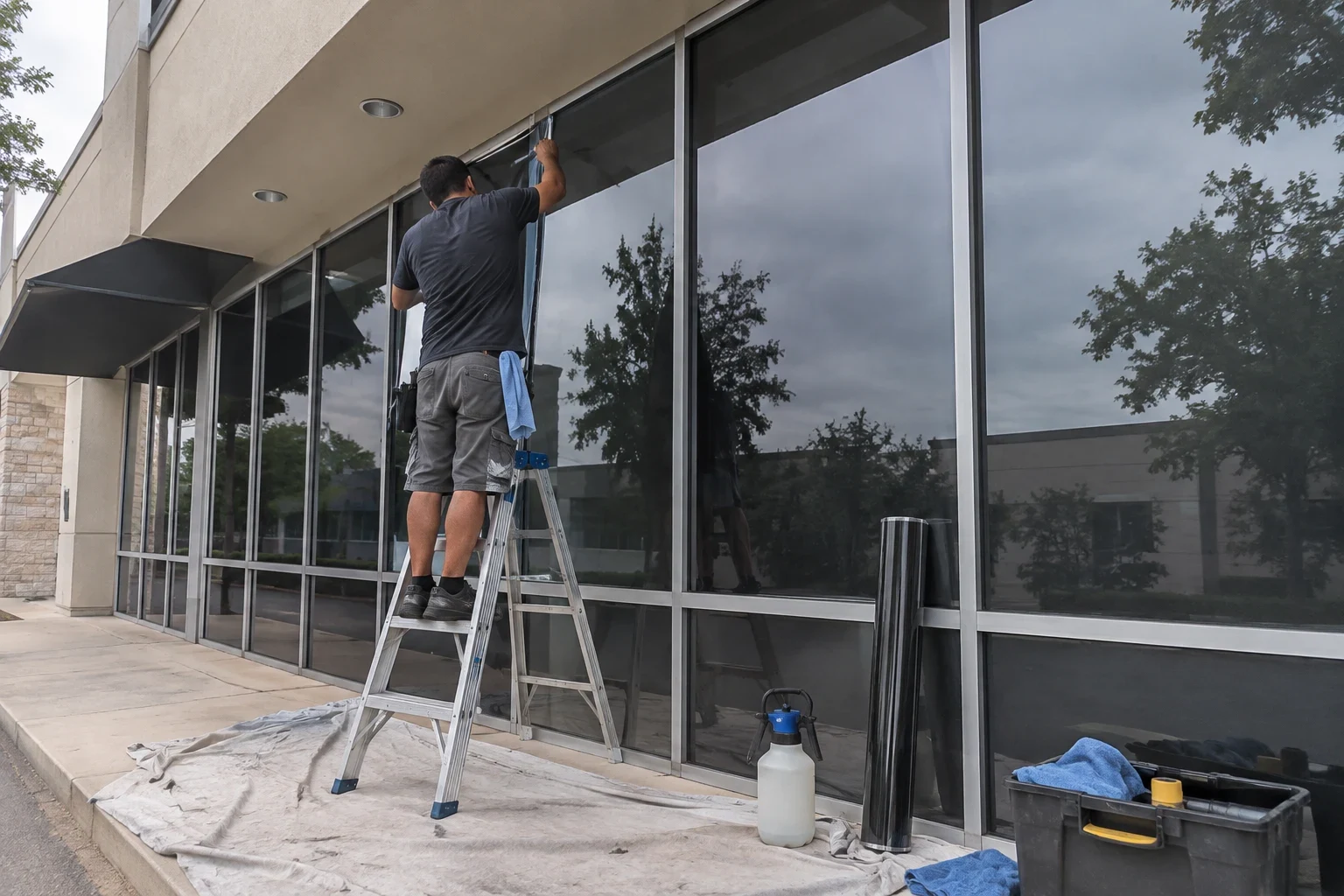
We install window film on storefronts, restaurants and commercial buildings to cut heat, glare and UV fading without disrupting your day. Our insured installers fit each pane cleanly, and the film helps protect the glass, fixtures and stock you already have.
Film that protects what your building already has
Commercial glass that faces the afternoon sun takes a steady beating. Hours of direct light bake display windows, fade merchandise and flooring, and keep the air conditioning running long after closing. Window film is a thin, durable layer applied to the inside of the glass that rejects much of the solar heat and blocks most UV.
We treat it as upkeep. Good film slows the wear on carpet, signage, upholstery and the cooling equipment that works hardest on sunny walls. It also helps hold broken glass together, and years from now it can be removed and replaced without touching the windows themselves.
With 8 years in business behind us, we will tell you plainly when a different product, or no film at all, is the better answer for your glass in Kemah.
What a commercial job includes
- A survey of every pane
- We check glass type, thickness, existing coatings and the condition of the seals. Some insulated and low-E glass needs a specific film to avoid heat stress, so we confirm compatibility before we recommend anything.
- Film matched to the space
- Ceramic film gives strong heat rejection with a clear view. Reflective film adds daytime privacy on street-facing glass, and non-reflective film keeps a storefront looking open. We bring samples so you can judge them on your own windows.
- Careful prep and a clean edge
- Each pane is scraped, cleaned and squeegeed before film goes on. Edges are trimmed tight to the frame with an even gap, so they do not lift or collect grime over time.
- Old film removal
- If faded or bubbling film is already on the glass, we strip it and the leftover adhesive first. New film only lasts as long as the surface under it is clean.
- Cleanup and care notes
- We wipe down sills, clear every trim scrap and leave simple cleaning instructions for your staff or janitorial crew: soft cloth, no ammonia, no abrasive pads.
Signs your building is ready for window film
Faded displays and floors
Product boxes, fabric and wood floors near the glass lose color first. Once you notice it, the UV damage has been building for a while.
Hot spots near the windows
Staff move desks away from the glass or customers skip the tables by the window. The thermostat keeps getting turned down and the room still feels uneven.
Glare on screens and registers
Point-of-sale screens and monitors wash out in the afternoon. Glare reduction lets people work without squinting or angling every display.
Old film that has turned purple
Older dyed films break down, change color and bubble. That means the film has failed, not the glass, and replacing it is a straightforward job.
Blinds that stay closed all day
If you keep the shades down to manage heat, you lose the daylight and the view you paid for. Film handles the heat while the blinds stay open.
What moves the price
Commercial pricing follows the glass, not just the size of the building. Two storefronts with identical frontage can land far apart once pane sizes, coatings and access are counted. So we measure in person and hand you a written estimate built from your actual windows.
Glass area and number of panes
The total square footage of glass sets the starting point. A wall of divided lites means more cutting, trimming and edge work than one broad sheet covering the same span, so labor rises with the pane count.
The film you choose
Ceramic film sits at the higher end of the range compared with dyed or reflective options. In exchange, it keeps its clarity and heat rejection for longer before it needs attention.
Reach and setup
Tall transoms, clerestory glass and panes tucked behind fixed shelving can call for lifts, ladders or extra time to clear the area safely.
Taking off old film
Removing worn film and the glue beneath it is its own stage of the job. Film that has baked onto sun-facing glass for years takes longer to lift without scratching the pane.
Before-open or after-close work
Scheduling outside your business hours keeps the doors open for customers, and it shapes how we staff and plan the installation.
How the job runs
- 1
A call for your free quote
Tell us about the building and the windows that bother you most. We set a time to see the glass in person.
- 2
Walkthrough and samples
We measure, test samples on your panes and talk through heat, privacy and appearance. You get a written estimate broken out by window area and film type.
- 3
Installation day
Our insured installers lay drop cloths, move or cover displays near the glass and work in sections. We can start early or after close so customers and staff keep using the space.
- 4
Curing and a final look
Fresh film can show slight haze or small water pockets for a few days while moisture escapes, and humid weather can stretch that out. If anything still looks off after curing, call us and we will come look at it.
Commercial window film questions
Will film make it hard to see into my store?
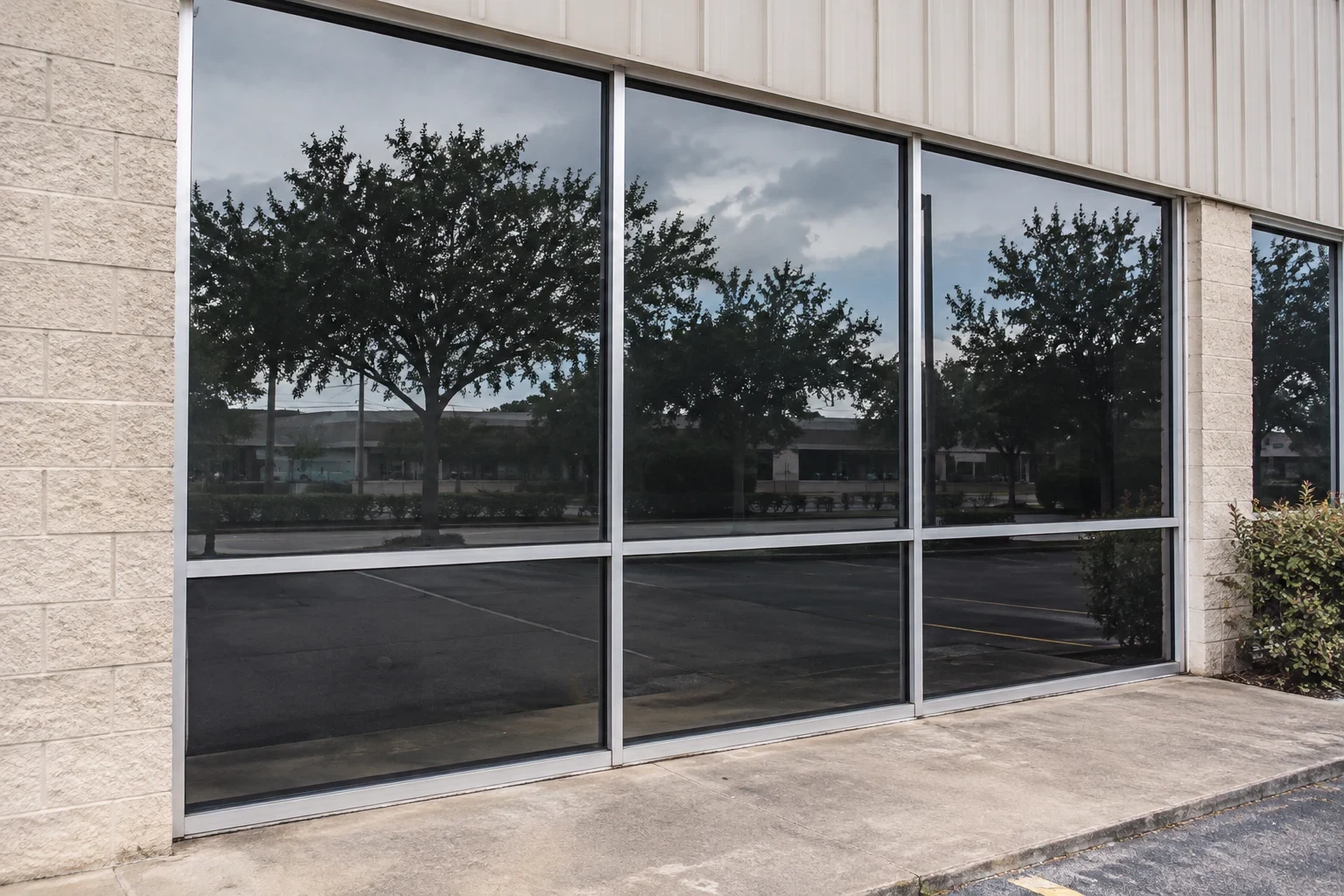
Not if we choose the right product. Non-reflective and lighter ceramic films keep displays visible from the sidewalk while still cutting heat and UV. Reflective film gives more daytime privacy but makes the glass look mirrored from outside, so we show you both before you decide.
Can you install while we are open?
Yes, in most cases. We work one section at a time, keep tools and water contained, and can schedule around your busiest hours or after close. Customers usually notice little beyond a few covered windows.
Is film safe on double-pane or low-E glass?
Usually, but not every film suits every glass. Some combinations absorb too much heat and stress the pane. We check the glass type during the walkthrough and only recommend film that is compatible with it.
How long does commercial window film last?
Quality film lasts many years when it is cleaned gently and installed on a well-prepped surface. Sun exposure, the film type and how the glass is cleaned all affect lifespan. We leave care instructions so your crew does not shorten it by accident.
How long does a typical storefront take?
A modest storefront is often finished in a single visit, while larger buildings with many panes or old film to strip may run across several days. We give you a realistic schedule with the estimate, so you can plan staffing and deliveries around it.
Do you handle offices and security film too?
We do. Our Office Window Tinting page covers glare and comfort for workspaces, and Security Window Film covers thicker films that help glass resist break-ins and storm debris.
Let us look at your glass
One call gets you a free quote and a straight answer about which film suits your building. We work across Kemah, League City, Webster, Seabrook and nearby towns.